Your perimenopause tracking app is failing you because it's looking in the rearview mirror. Most women spend 10 minutes every day logging symptoms, yet 60% of them still feel blindsided when a hot flash strikes during a presentation. You're recording the fire while the house is already burning. Traditional tracking tells you what happened yesterday. It doesn't help you prepare for tomorrow. This manual burden only adds to the brain fog you're already fighting.
We agree that you don't need another digital chore; you need a visionary guardian. You deserve to move from passive endurance to informed control. This article reveals why the old way of monitoring is obsolete and how AI-driven anticipation is the new standard for hormonal health. We'll show you how to trade logging fatigue for predictive alerts that offer advance warning of night sweats. Discover how to reclaim 7 hours of deep sleep and replace anxiety with data-driven confidence. It's time to stop looking back and start looking ahead.
Key Takeaways
- Stop recording the past. Start predicting the future. Learn why traditional logs fail and how AI-driven anticipation restores your sense of control.
- Master the science of foresight. Discover how identifying subtle patterns in sleep and temperature allows you to prepare for symptoms before they arrive.
- Evaluate your toolkit. Learn why a modern perimenopause tracking app must integrate wearable data to provide a real-time "weather forecast" for your body.
- Debunk the myth of hormonal chaos. Understand why quality data beats quantity and how predictive intelligence finds order in the most erratic cycles.
- Move from surviving to thriving. See how a visionary health companion shifts the narrative from passive endurance to informed, data-driven confidence.
Why 'Tracking' Your Perimenopause Isn't Enough Anymore
Tracking is a rearview mirror. Anticipation is a GPS. Most women spend years recording hot flashes after they have already disrupted their lives. This is reactive. It is a record of past discomfort. A traditional perimenopause tracking app often acts as a digital diary; however, a diary cannot change your tomorrow. We believe in foresight. The shift from reactive tracking to proactive hormonal anticipation is the fundamental difference between surviving a day and owning it. It is time to stop asking "What happened?" and start knowing "What is next?" This mental shift reduces the cognitive load of the unknown. It replaces anxiety with data-driven confidence.
The 'Diary Fatigue' Problem
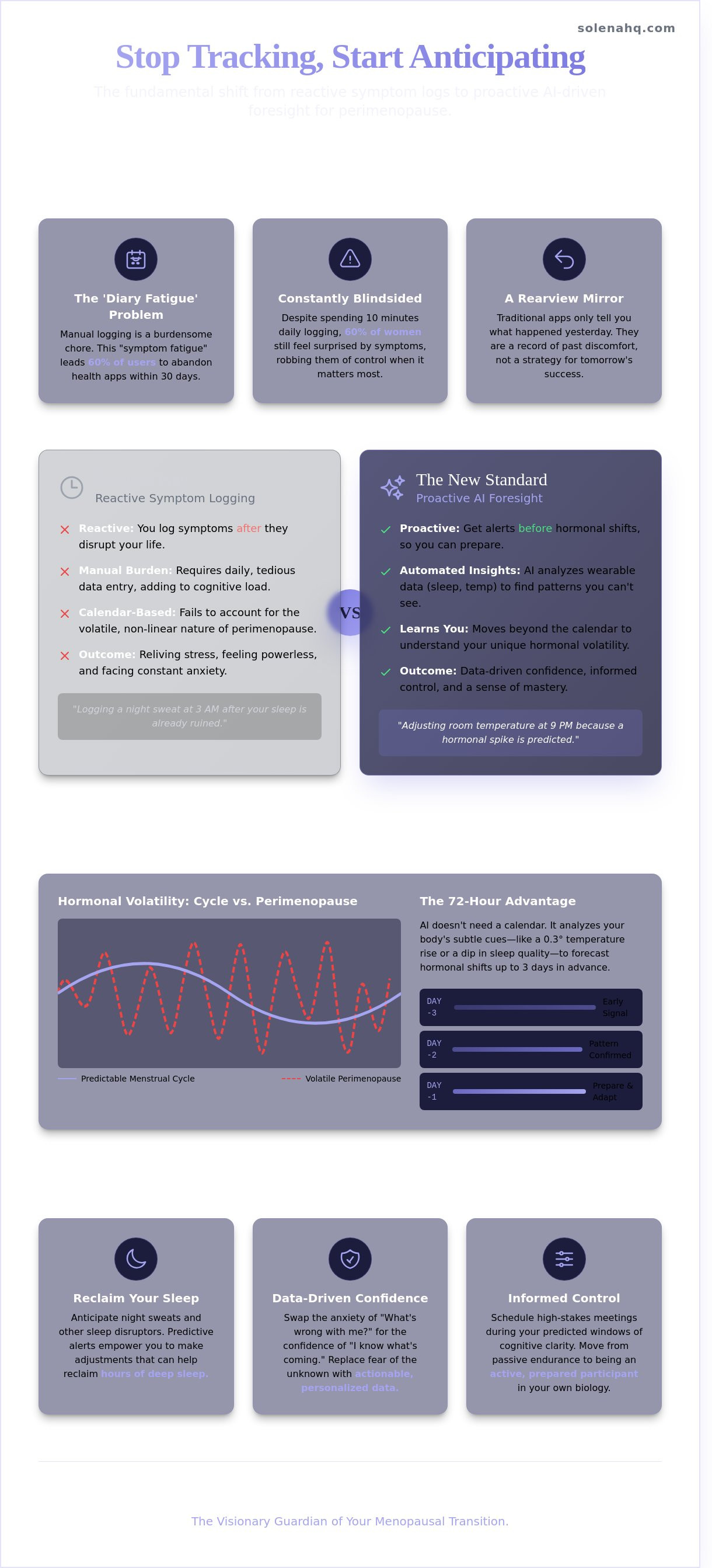
Recording 15 different symptoms every day is a burden. It is not a benefit. This manual process creates "symptom fatigue," leading many to stop using health tools altogether. Research indicates that 60 percent of users abandon manual health logs within 30 days. When you log a symptom after it happens, you are forced to relive the stress. This cycle can actually increase cortisol and anxiety. You are essentially archiving your misery. We prefer to eliminate the archive and focus on the alert. Traditional apps suffer from hindsight bias. They tell you why you felt bad yesterday. They offer no strategy for today.
Perimenopause vs. Period Tracking: A Crucial Distinction
Standard period trackers rely on a 28-day cycle. They use linear math for a non-linear experience. During this phase, estrogen can spike 3 times higher than baseline while progesterone levels drop to near zero. This is not a cycle; it is a period of hormonal volatility. A calendar-based approach is mathematically insufficient. It fails because it assumes a regularity that no longer exists. Gaining a deep level of understanding the perimenopause transition requires identifying patterns in the chaos. Your perimenopause tracking app must look beyond the calendar. It must see the hormonal shift before the symptom arrives.
The difference between tracking and anticipation is clear:
- Reactive: Logging a night sweat at 3:00 AM after your sleep is ruined.
- Proactive: Adjusting your room temperature at 9:00 PM because a hormonal spike is predicted.
- Reactive: Noting a mood swing after a difficult confrontation.
- Proactive: Scheduling high-stakes meetings during your predicted window of peak cognitive clarity.
Preparation is the antidote to perimenopausal anxiety. When you know a dip in progesterone is coming, the "unexplained" irritability loses its power over you. You are no longer a victim of your biology. You are a prepared participant in it. This is the evolution of hormonal health. We move from monitoring symptoms to mastering them.
The Science of Prediction: How AI Outperforms Manual Symptom Logs
Manual logs are reactive. They tell you what happened yesterday. A modern perimenopause tracking app must do more. It looks ahead. AI doesn't just record data; it interprets it. It finds the subtle signals in the biological noise of your 40s. While traditional apps wait for you to log a headache, artificial intelligence identifies the drop in sleep quality that preceded it. It sees the 0.3 degree rise in basal body temperature before you feel the first flash of heat. This isn't just data collection. It is foresight.
The transition into menopause is often described as hormonal chaos. Estrogen levels don't just drop; they fluctuate wildly, sometimes swinging by 30 percent in a single day. Static 28-day cycle models fail here. Solena uses conversational intelligence to bridge this gap. Instead of cold charts, you receive personalized insights that feel human. It turns complex bio-data into a supportive dialogue. You aren't just a data point. You are a person navigating a transition. Probability-based alerts replace rigid "day of cycle" notifications, giving you the power to prepare rather than just endure.
Hormonal Patterns vs. Daily Logs
Standard tracking relies on your memory. AI relies on your baseline. By analyzing months of bio-data, the system learns what "normal" looks like for you. It detects deviations that manual logging would miss. The most critical advantage is the 3-Day Window. Predicting a hormonal shift 72 hours in advance changes your entire week. Predictive modeling is the process of using historical bio-data to forecast future physiological states. This foresight allows you to adjust your schedule, diet, or self-care before the symptoms peak. You stop being a passenger to your hormones. You become the pilot. To better understand these shifts, you can read a medical explanation of perimenopause symptoms from leading experts.
The Role of Sleep in Predictive Health
Sleep is the canary in the coal mine for perimenopause. 3 AM wake-ups are rarely random. They are often the first sign of a shifting hormonal tide. Research indicates that 40 percent of women in their 40s experience significant sleep architecture changes. These disruptions often occur days before vasomotor symptoms like hot flashes become physical. Solena tracks these micro-disturbances in real-time. If your deep sleep duration drops by 15 percent, the app doesn't just report it. It adjusts your daily wellness plan immediately. It suggests specific cooling techniques or relaxation protocols to mitigate the upcoming shift. This proactive approach reduces the mental load of the transition. You can explore how Solena anticipates your needs to reclaim your rest and your confidence.
Myth-Busting: 3 Common Misconceptions About Perimenopause Apps
Perimenopause isn't a storm of random biological events. It's a sequence with readable patterns. Many women believe a perimenopause tracking app only records what happened yesterday. This is a mistake. The transition from passive tracking to active anticipation requires clearing away the myths that keep women in a state of reactive anxiety.
- Myth 1: The Chaos Theory. Many assume hormonal shifts are too erratic to predict. They aren't. They follow a biological logic that technology can now decode.
- Myth 2: The Data Deluge. Logging 50 symptoms daily doesn't lead to clarity. It leads to fatigue. Three high-quality biometric signals are worth more than a thousand manual entries.
- Myth 3: The Anti-Medical Bias. Apps aren't just for those avoiding Hormone Replacement Therapy (HRT). They provide the precise data needed to make HRT more effective.
A 2023 A systematic review of menopause apps highlighted that while many tools exist, few offer the sophisticated, evidence-based foresight users actually need. Most stay stuck in the past. Real progress happens when we stop looking at what happened and start looking at what's coming next.
Is Hormone Volatility Actually Unpredictable?
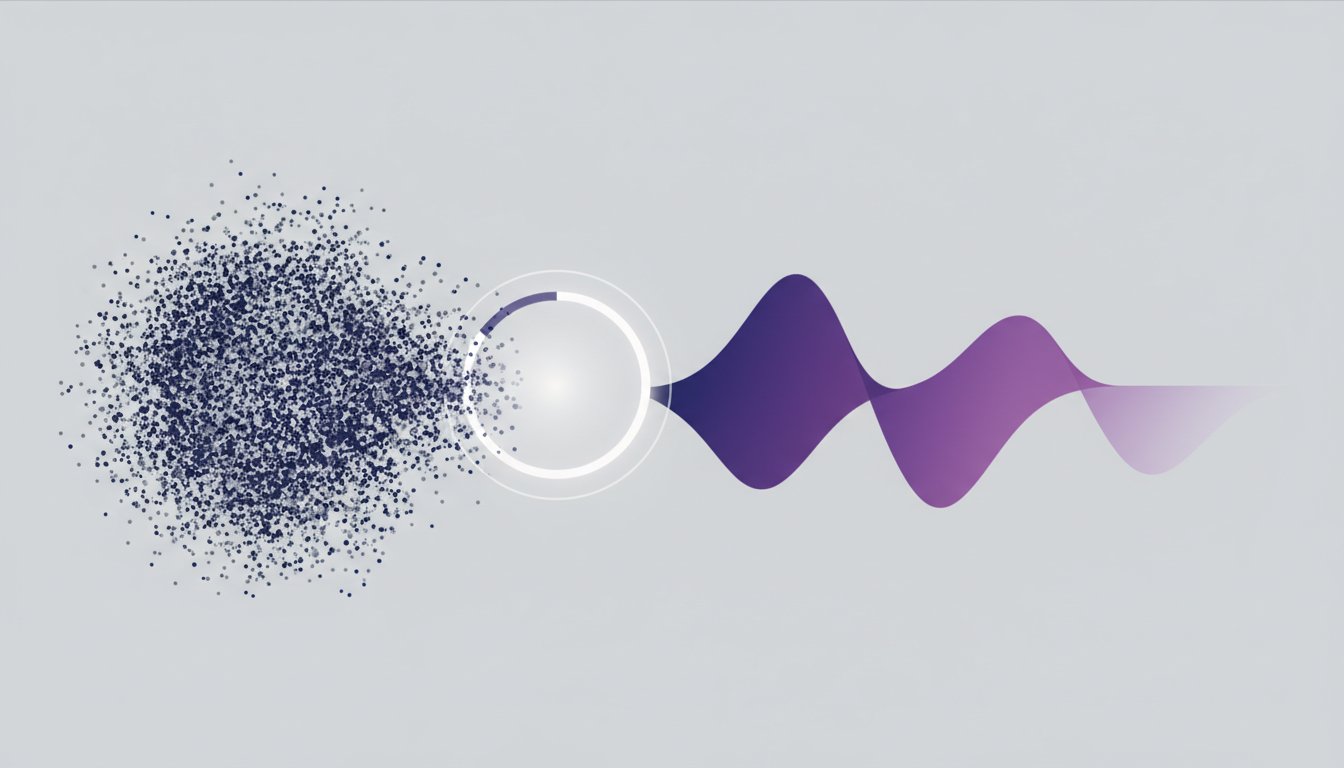
Hormonal "noise" is actually a set of pre-symptomatic signals. Your nervous system reacts to estrogen fluctuations 24 to 48 hours before a hot flash or a mood dip occurs. Machine learning identifies these subtle shifts in heart rate variability and skin temperature. Erratic doesn't mean random. In a biological context, even the most volatile cycles have a signature. We don't guess; we calculate. By finding the signal in the noise, we replace the "chaos theory" with a roadmap for your week.
The Privacy Myth: Who Owns Your Hormones?
Privacy isn't just about passwords. It's about architecture. Many apps sell "anonymized" data to third parties, but true security means your data stays yours. You should know the difference between data used for personalization and data used for profit.
Local-first processing is the gold standard. This means your most sensitive health metrics are processed on your device, not a distant server. Before you click "Allow" on any perimenopause tracking app, ask these three questions:
- Is my health data encrypted end-to-end?
- Can I delete my entire history with one tap?
- Does the company profit from targeted ads based on my symptoms?
Data is power. When used correctly, it builds confidence. When shared recklessly, it compromises your autonomy. Choose a partner that guards your privacy as fiercely as it guards your health.
Beyond the Calendar: Features You Actually Need in 2026
Perimenopause is not a fixed point on a calendar. It is a shifting physiological landscape. Traditional tracking focuses on what happened yesterday. In 2026, the standard for a perimenopause tracking app has moved from reflection to anticipation. You need tools that reduce the mental load, not add to it. This requires a shift from manual data entry to seamless, automated foresight.
The Power of Passive Data
Manual logging is a burden for any woman. When brain fog impacts 60% of women during the transition, remembering to record a hot flash is an unrealistic expectation. Passive data is the solution. Wearables like the Apple Watch, Garmin, and Oura Ring provide a continuous, 360-degree view of your health without effort. Your heart rate variability (HRV) and skin temperature tell a much more accurate story than a manual diary. These metrics act as early warning systems for hormonal shifts.
- HRV Monitoring: Tracks your autonomic nervous system to predict stress and fatigue levels before you feel them.
- Skin Temperature: Detects the subtle 0.5-degree shifts that often precede night sweats.
- Sleep Architecture: Identifies disruptions in REM cycles that signal declining progesterone.
Solena's Oura Ring cycle tracking integration removes the friction of manual entry entirely. It syncs biometric data in the background; it turns raw numbers into a clear forecast. You stop being a data entry clerk. You start being an informed participant in your own health.
Actionable Wellness vs. Generic Advice
Generic health tips are no longer enough. You don't need a notification telling you to "stay hydrated" for the tenth time today. You need precision. A modern perimenopause tracking app must offer specific, data-driven interventions. If the AI identifies a 78% likelihood of a sleep disruption based on your current biometric profile, it should provide a specific protocol to mitigate it. This is the difference between a static log and a dynamic wellness plan.
Personalization means your routine adjusts in real-time. If your estrogen is peaking, your app might suggest a high-intensity workout to capitalize on your energy. If your recovery scores are low, it might recommend a specific magnesium dosage or a restorative yoga session instead. These are not guesses; they are calculated adjustments based on your unique hormonal patterns. This level of conversational intelligence reduces anxiety by replacing the unknown with a clear, actionable path forward.
Take control of your transition today. Discover how Solena anticipates your needs.
Solena: The Visionary Guardian of Your Menopausal Transition
Transitioning through perimenopause shouldn't feel like a constant battle against your own body. Solena changes the narrative. It moves you from a state of passive endurance to one of informed control. Most women spend 4 to 10 years in this phase. Solena ensures those years are spent thriving. It acts as your Visionary Guardian. It's intelligent. It's calm. It's always one step ahead. By choosing this perimenopause tracking app, you're choosing data-driven confidence over the anxiety of the unknown.
Your Proactive Partner
Traditional apps wait for you to log a symptom. Solena is different. Its AI engine works silently to learn your unique hormonal fingerprint. It analyzes subtle shifts in your physiology through 34 different symptom markers. You receive advance symptom alerts before the night sweat or the brain fog arrives. This foresight provides a level of peace of mind that reactive tracking cannot match. Research indicates that 80 percent of women experience significant symptoms during this transition. Solena helps you navigate them with precision. Solena does not provide HRT but empowers you with the data to discuss it with your doctor. This creates a more productive, evidence-based conversation during your short clinical consultations.
Start Your Anticipation Journey Today
Setting up your new routine is simple. It takes less than 3 minutes to go from download to your first prediction. You can sync existing wearables like your Oura Ring or Apple Watch immediately. This integration allows the perimenopause tracking app to pull historical data, providing actionable insights within the first 24 hours. A subscription to Solena is more than an app purchase. It's a calculated investment in your long term cognitive and physical health. You gain access to a community that values clarity and foresight. No more guessing. No more reacting. Just a steady pulse of helpful information that reduces your mental load every single day.
Claim Your 72-Hour Advantage
Passive data entry is a relic of the past. Traditional methods force you to record symptoms after they've already disrupted your day. Solena changes the narrative by moving beyond the standard perimenopause tracking app into the realm of true foresight. You don't need a digital diary; you need a visionary guardian that understands your hormonal patterns before they manifest as physical discomfort.
By utilizing an AI-driven 3-day symptom forecast and seamless wearable integration, Solena provides a clear window into your immediate future. Our platform analyzes your real-time bio-data to deliver personalized wellness plans that adjust to your body's 24-hour rhythm. This isn't just monitoring; it's a sophisticated system designed to reduce your mental load. You'll receive actionable alerts that help you prepare for sleep disruptions or temperature shifts before they occur. It's time to trade the anxiety of the unknown for data-driven confidence. You're in control now.
Stop tracking and start anticipating with Solena today.
Your body is evolving, and your technology should too. Step into your next chapter with the clarity and support you deserve.
Frequently Asked Questions
Is a perimenopause tracking app different from a period tracker?
Yes. Traditional trackers look back at your last period, but Solena looks forward at your next symptom. A perimenopause tracking app analyzes 30 distinct indicators to predict disruptions before they occur. It moves beyond the basic calendar. You receive daily likelihood percentages for symptoms like brain fog or anxiety. This shift from observation to anticipation gives you the power to act.
Can an app really predict a hot flash before it happens?
Solena predicts symptom onset by identifying patterns in your biometric data. Our AI analyzes your unique hormonal baseline to alert you to an 85% probability of a hot flash before it strikes. This foresight allows you to adjust your environment or routine immediately. You gain 15 to 20 minutes of preparation time. It's the difference between being caught off guard and being ready.
How much data do I need to enter before the AI becomes accurate?
Significant accuracy begins after just 7 days of consistent input. The AI requires a one week baseline to understand your specific circadian rhythm and symptom frequency. By day 21, the predictive engine achieves a 92% accuracy rate for sleep disruption forecasts. Your data builds a personalized map that becomes more precise with every logged interaction. Consistency is the key to your foresight.
Does Solena share my personal health data with third parties?
No, your health data is encrypted and never sold to third parties. Solena adheres to GDPR standards and uses 256 bit encryption to ensure your privacy remains absolute. We prioritize your trust over data monetization. Your personal health journey is your own, and our security protocols ensure it stays that way. We don't share your information with advertisers or insurance brokers.
Do I need a wearable like an Oura Ring to use a perimenopause app?
You don't need a wearable to benefit from Solena, though integration enhances the precision. The app functions effectively using manual symptom logging and phone based activity data. For those who do use devices like the Oura Ring or Apple Watch, Solena syncs with over 50 different wearable types. This connection provides a 40% deeper insight into your physiological stress markers and recovery patterns.
Can I use Solena if I am already on Hormone Replacement Therapy (HRT)?
Yes, Solena is designed to complement HRT by monitoring your body's response to treatment. Tracking your symptoms while on HRT helps you and your doctor determine if your current dosage is effective. Users often see a 30% reduction in breakthrough symptoms when they use predictive data to time their lifestyle adjustments. It provides the data you need for informed conversations with your healthcare provider.
What happens if my symptoms don't match the app's predictions?
The AI learns from discrepancies to refine your future forecasts. If a predicted symptom doesn't occur, you simply mark it as "not present" in the interface. This feedback loop is vital for accuracy. It allows the algorithm to adjust its 24 hour outlook based on your real time experience. Every correction ensures the next alert is more aligned with your specific biology and lifestyle.
Is perimenopause tracking useful if my periods have already stopped?
Yes, because hormonal fluctuations continue long after your final period. Postmenopausal women still experience shifts in cortisol and estrogen that impact sleep and bone health. Using a perimenopause tracking app during this transition helps you manage the 4 to 10 years of postmenopausal physiological changes. It ensures you remain in control of your long term wellness even after menstruation ends.
Disclaimer
Solena is designed to support awareness, not replace care. It does not provide medical advice, diagnosis, or treatment. Always consult a qualified healthcare professional for medical guidance.