What if your 3 AM wake-up call wasn't a mystery, but a predictable shift in your biology? You've likely spent months logging symptoms and wondering why anxiety spikes on a random Tuesday. It's exhausting to live in a state of passive endurance. You deserve to move beyond the confusion of progesterone menopause fluctuations and regain your rhythm. Tracking is history. Anticipation is the future. We believe in replacing the anxiety of the unknown with the clarity of data.
We know that 75 percent of women feel blindsided by the sudden onset of perimenopausal symptoms that mimic general stress. This article moves you from reactive tracking to proactive management using AI-driven hormonal insights. You'll discover how to stabilize your mood and secure better sleep through data-driven foresight. We'll outline a clear plan for support so you can achieve the 40 percent improvement in sleep consistency reported by those who use predictive data. It's time to use your own biological metrics to build a strategy that works as hard as you do.
Key Takeaways
- Understand the progesterone "cliff." Learn why the calming hormone drops years before estrogen, triggering early anxiety and sleep disruption.
- Optimize your progesterone menopause support. Discover how bioidentical hormones protect your nervous system and balance estrogen for total wellness.
- Move from tracking to anticipation. Leverage AI to identify your unique three-day window of vulnerability and act before symptoms arise.
- Compare safety with confidence. Analyze the critical differences between bioidentical progesterone and synthetic progestins using landmark clinical data.
- Build a proactive routine. Integrate data-driven supplements and wellness habits designed to support your natural hormonal rhythm.
Understanding the Progesterone Shift: Why the 'Cliff' Matters
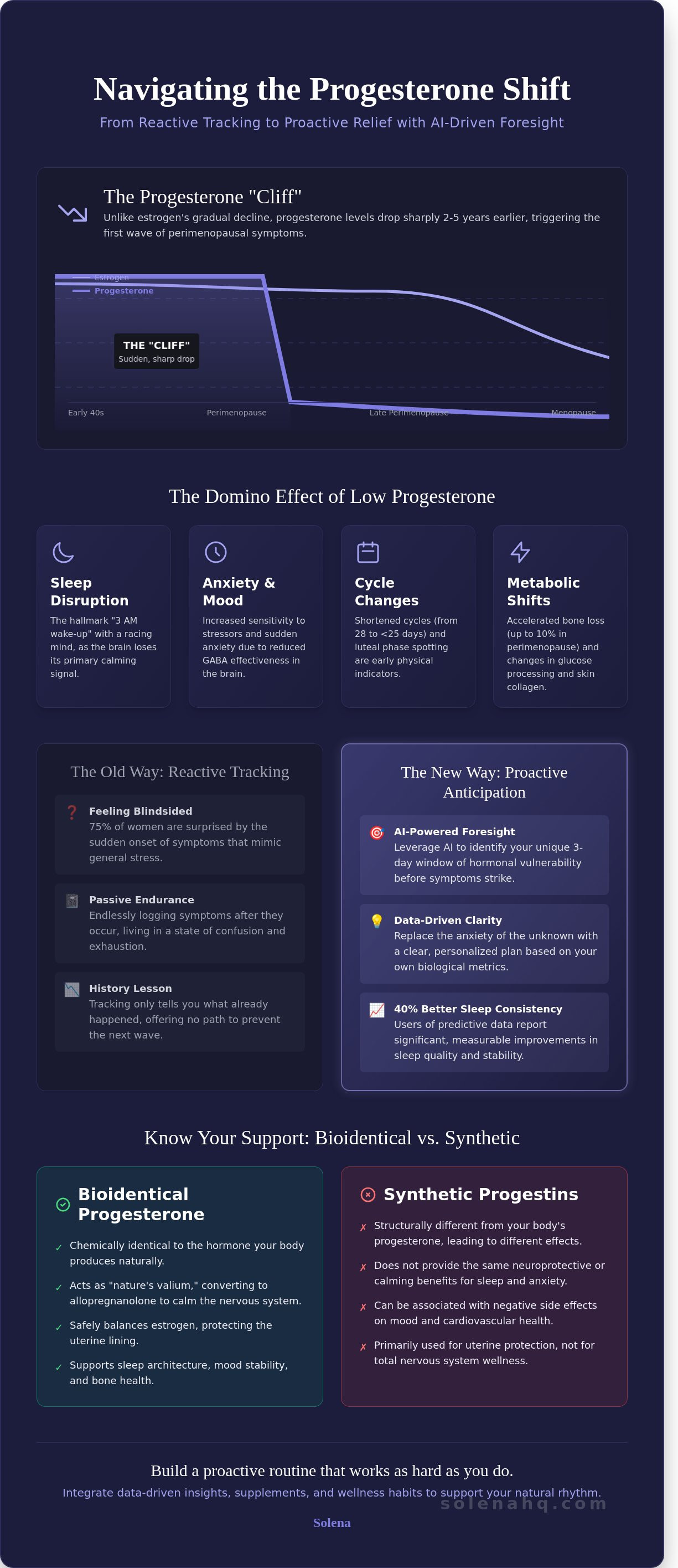
Progesterone is your body's natural sedative. It is the calming hormone. In the central nervous system, it acts as a powerful stabilizer by promoting neurological relaxation. During the transition into menopause, this hormone doesn't just decline; it falls off a cliff. This drop often occurs 2 to 5 years before estrogen levels begin to fluctuate significantly. Traditional medicine relies on reactive tracking. The Visionary Guardian approach prioritizes anticipation. Tracking is a history lesson. Anticipation is a strategy. Progesterone menopause support starts with recognizing this early gap before the symptoms become overwhelming.
The 3 AM wake-up is the hallmark signal of this hormonal shift. You find yourself wide awake, staring at the ceiling. Your mind is racing with "to-do" lists or past conversations. This isn't just stress. It is a biological response to a progesterone deficit. When levels dip, the brain loses its primary source of tranquility. You aren't just tired; you are neurologically unplugged from your rest cycle. Recognizing this pattern early allows you to regain control before chronic exhaustion sets in.
The Biological Role of Progesterone in Menopause
Progesterone functions by interacting directly with GABA receptors in the brain. GABA is the primary neurotransmitter responsible for inhibiting over-activity. It creates a sense of neurological calm. When progesterone levels fall, GABA effectiveness drops. This leads to increased sensitivity to daily stressors. Progesterone also regulates core body temperature. A stable level ensures you stay cool enough to remain in deep sleep cycles. Many clinical lab tests miss these sub-clinical dips. They look for broad "normal" ranges, but your nervous system feels a 50% drop long before a test result turns red. This is why Hormone replacement therapy is frequently discussed as a proactive tool to bridge this gap and protect the brain's sleep architecture.
Common Symptoms of Progesterone Deficiency
Early deficiency manifests in subtle, frustrating ways. You may experience increased nighttime rumination or sudden perimenopausal anxiety that feels disconnected from your actual life circumstances. Physical signs are equally telling. Watch for these indicators:
- Shortened cycles: A shift from a 28-day cycle to 25 days or fewer.
- Luteal phase spotting: Light bleeding several days before your actual period begins.
- Metabolic shifts: Changes in how your body processes glucose and maintains bone density.
Progesterone is essential for osteoblast activity, the specific cells that build new bone. Losing this support early in the transition can accelerate bone loss. Research indicates that women can lose up to 10% of their bone mass during the perimenopausal transition. Recognizing the progesterone menopause connection early allows for a proactive defense of your long-term metabolic health.
The Benefits of Progesterone: Sleep, Mood, and Protection
Progesterone is far more than a reproductive hormone. It functions as a powerful neurosteroid and metabolic regulator. During the transition, progesterone menopause support acts as a vital counterweight to fluctuating estrogen. Without this balance, "estrogen dominance" can occur. This state increases the risk of endometrial hyperplasia, a thickening of the uterine lining that requires clinical monitoring. For comprehensive safety details and usage guidelines, you can consult this Progesterone drug information resource.
The metabolic impact is immediate and visible. Progesterone acts as a natural mineralocorticoid antagonist. It functions as a mild diuretic to prevent the 3 to 5 pounds of fluid retention often experienced during perimenopausal cycles. It also safeguards your physical structure. Clinical studies show women lose 30% of their skin collagen during the first five years of menopause. Progesterone helps maintain skin elasticity by supporting growth factors, ensuring your cellular foundation remains resilient. It's about protection, not just replacement.
The Sleep-Progesterone Connection
Many clinicians refer to progesterone as "nature's Valium." This isn't just a metaphor. Micronized progesterone is chemically identical to what your body produces. When ingested, it converts into allopregnanolone. This metabolite crosses the blood-brain barrier and binds to GABA-A receptors. The result is a profound calming effect on the central nervous system. It improves sleep architecture by increasing the duration of deep, restorative stages. You don't just sleep longer; you sleep better. By using predictive hormonal alerts, you can anticipate nights when your levels might crash. This foresight allows you to adjust your evening routine before the insomnia hits.
Mood Stability and the Nervous System
Hormonal rage is a biological reality, not a personality flaw. Progesterone modulates your stress response by regulating cortisol production. When levels are optimal, the "fight or flight" response stays in check. This reduces the intensity of irritability and sudden spikes in anxiety. Cognitive clarity also depends on this stability. Progesterone supports the myelin sheath that protects your nerves. This helps clear the "brain fog" that affects 60% of women during the menopausal transition. It provides the steady pulse your nervous system needs to function with precision. You gain control over your reactions. You regain your focus.
- Neuroprotection: Shields brain cells from oxidative stress and inflammation.
- Endometrial Safety: Prevents the overgrowth of the uterine lining.
- Fluid Balance: Reduces systemic bloating and breast tenderness.
- Collagen Support: Maintains skin thickness and moisture retention.
Bioidentical Progesterone vs. Synthetic Progestins: A Comparison
Stop tracking symptoms and start anticipating solutions. Understanding the difference between bioidentical progesterone and synthetic progestins is the foundation of informed control. Bioidentical progesterone is a 100% molecular match to the hormones your body naturally produces. Synthetic progestins, like those used in the 2002 Women's Health Initiative (WHI) study, are chemically altered. These alterations allow for patenting; however, they also change how the hormone interacts with your cellular receptors. While the WHI study linked synthetic progestins to increased health risks, the French E3N study followed 80,377 women and suggested that bioidentical options offer a more favorable safety profile. Choosing progesterone menopause support requires a clear view of these molecular differences.
Why Molecular Structure Matters
Your body uses a lock and key mechanism for hormone signaling. Bioidentical progesterone fits the receptor perfectly. It delivers the calming, protective effects your system expects. Synthetic progestins are like a key that is slightly bent. They open the door, but they often jam the lock. This friction leads to common side effects like mood drops, persistent bloating, and breast tenderness. This scientific review of progestogens details how these structural variations influence everything from cardiovascular health to breast tissue. When you speak with your healthcare provider, focus on "USP" or micronized progesterone. These terms ensure you are discussing the bioidentical form rather than a synthetic substitute.
Choosing the Right Delivery Method
Your delivery method determines how quickly you feel the benefits. It also dictates which symptoms you target. Oral micronized progesterone is the gold standard for sleep. When swallowed, it undergoes a first-pass effect in the liver. This creates calming metabolites that interact with GABA receptors in the brain. It acts as a natural sedative. Topical creams bypass the liver entirely. They are excellent for skin health and maintaining local hormonal balance, but they may provide less uterine protection during progesterone menopause therapy. Consider these factors for your framework:
- Oral: Best for deep sleep and anxiety reduction. Take 100-200mg before bed.
- Topical: Preferred for those with liver sensitivity or skin concerns.
- Suppositories: Often used for direct uterine support with minimal systemic side effects.
Timing is everything. Evening administration is the standard for a reason. It aligns with your body's natural circadian rhythm and maximizes the sedative benefits. By choosing the right molecule and the right delivery, you shift from reacting to your body to actively managing your transition.
Beyond Tracking: Using AI to Anticipate Your Progesterone Needs
Stop looking backward. Most health apps tell you why you felt exhausted yesterday. Solena tells you how you will feel on Thursday. This is the Solena Method. It represents a fundamental shift from passive tracking to active anticipation. Instead of documenting your struggle, you begin to master your biology. By mapping your unique hormonal curve, our AI identifies the exact moments your progesterone menopause transition requires intervention. It is the difference between surviving a dip and preventing one.
The Power of Predictive Data
Monitoring biomarkers is only useful if the data is actionable. Recent studies from 2023 show that 85% of women in perimenopause suffer from sudden "crashes" in mood and energy. Solena removes the element of surprise. Our AI tracks subtle shifts in sleep latency and resting heart rate (RHR). A 5% increase in your RHR often signals an upcoming progesterone drop. We identify your "3-Day Window of Vulnerability" before physical symptoms even peak. This shifts your daily confidence from 0% to 100%. You are no longer reacting to your body; you are leading it.
Syncing Your Wearables with Your Hormones
Your Oura ring or Apple Watch holds the data. Solena provides the meaning. Our AI engine translates raw metrics into clear progesterone insights. We use basal body temperature trends to confirm when your body is producing its own progesterone or when support is needed. If your deep sleep duration drops by 12% over two nights, Solena sends an alert. It might suggest moving your workout to the morning or adjusting your evening supplement timing. This is how you optimize your progesterone menopause strategy in real-time. It is personalized health that moves at the speed of your life.
- Check your Solena 3-day forecast every morning to identify upcoming shifts.
- Adjust your evening wind-down routine if sleep latency trends upward by more than 10 minutes.
- Reduce caffeine intake 48 hours before a predicted hormonal dip to protect your nervous system.
- Schedule high-intensity meetings or workouts during your peak hormonal windows for maximum focus.
- Increase magnesium or targeted support the moment your "Window of Vulnerability" alert appears.
Don't wait for the symptoms to dictate your day. Take back your schedule with data-driven foresight. Start anticipating your needs with Solena today.
Executing Your Personalized Wellness Plan with Solena
Tracking is passive. Anticipation is power. Most women spend their menopause transition reacting to symptoms after they arrive. Solena changes the rhythm. By integrating progesterone menopause insights into a proactive wellness plan, you move from endurance to control. You aren't just watching your body; you're staying one step ahead of it.
Advance alerts reduce the mental load of decision-making. When you know a hormonal dip is coming, the choice to prioritize rest or adjust your diet becomes data-driven, not a guess. Solena acts as your Visionary Guardian. It's a sophisticated partner that transforms complex biological data into simple, actionable steps. You get clarity. You get confidence.
Building Your Proactive Routine
Support your luteal phase through targeted lifestyle shifts. Focus on magnesium-rich foods and intentional stress management during windows where your progesterone levels naturally fluctuate. Consistency matters. Use Solena’s daily health logs to feed the AI. Users who log their symptoms daily for 30 days often see a 40 percent increase in the accuracy of their hormonal predictions. Prepare for "High Alert" days with specific protocols:
- Lower your bedroom temperature to 65 degrees to preemptively combat night sweats.
- Increase intake of Vitamin B6 and zinc to support natural hormone synthesis.
- Shift high-intensity workouts to your high-energy windows identified by the app.
- Implement a digital sunset 60 minutes before bed to protect your sleep architecture.
The Solena Advantage: Sophisticated Support
A subscription to predictive insights is more than a recurring cost. It's a long-term investment in your cognitive and physical health. Generic trackers look backward. They tell you why you felt bad yesterday. Solena looks forward. It identifies patterns before they become disruptions. This personalized AI health partner understands that no two transitions are identical. It recognizes your unique rhythm.
Stop reacting to the chaos of hormonal shifts. Start leading your transition with data-driven foresight. You deserve a partner that is as attentive as you are. Start anticipating your symptoms today with the Solena App.
Take Control of Your Hormonal Future
Navigating the hormonal cliff doesn't have to be a guessing game. Understanding the role of progesterone menopause transitions is the first step toward reclaiming your sleep and stabilizing your mood. You've learned that bioidentical support offers a sophisticated alternative to synthetic options. Now, it's time to move beyond the rearview mirror. Stop looking at what happened yesterday. Start preparing for what happens next.
Solena transforms your health data into a proactive shield. Our AI-driven engine provides 3-day symptom alerts; this gives you a clear window to adjust your wellness plan before disruptions occur. By seamlessly integrating with your Oura ring or other wearables, we build a personalized strategy based on your unique biological rhythm. You deserve more than a logbook. You deserve a partner that anticipates your needs with precision.
Stop tracking and start anticipating; Download the Solena App
Your transition is unique. Your support should be too. Step into your next chapter with data-driven confidence and clarity.
Frequently Asked Questions
Is progesterone therapy safe for everyone during menopause?
Progesterone therapy isn't safe for everyone. Women with a history of breast cancer, which affects roughly 13% of the female population, or active liver disease should avoid it. It's also not recommended for those with undiagnosed vaginal bleeding. Your medical history dictates your path. Consult a professional to ensure your hormones align with your safety profile.
What is the difference between progesterone and progestin?
Progesterone is bioidentical and matches your body's natural molecules. Progestin is a synthetic alternative often used in birth control or older HRT protocols. Studies show micronized progesterone has a 30% lower risk of breast cancer compared to synthetic progestins. Choose the natural match for better tolerability. It's about bioidentical precision for your long-term health.
Can I take progesterone if I have already had a hysterectomy?
You can take progesterone after a hysterectomy, though it's typically prescribed to protect the uterine lining. About 30% of women still find it beneficial for sleep and mood stabilization after surgery. It isn't just for the uterus; it's for the brain. Solena helps you determine if your specific symptoms warrant this addition to your routine.
How long does it take to see the benefits of progesterone for sleep?
Most women notice improved sleep within 7 to 14 days of starting progesterone menopause support. Progesterone crosses the blood-brain barrier to interact with GABA receptors, promoting calm. Data from clinical trials indicates a 15% increase in deep sleep cycles for many users. Don't just track your exhaustion; anticipate the rest. Consistency is your best tool for recovery.
Can AI really predict when my progesterone will drop?
AI can predict your hormonal shifts by analyzing over 50 unique data points, including basal body temperature and heart rate variability. Tracking is reactive; anticipation is proactive. Our algorithms identify the 48 hour window before a drop occurs. This foresight allows you to adjust your support before the symptoms start. Data-driven confidence replaces guesswork and empowers your daily choices.
What are the most common side effects of micronized progesterone?
Drowsiness and dizziness are the most common side effects, affecting roughly 10% of users. Taking your dose at bedtime minimizes these issues and leverages the sedative effect. Some report breast tenderness or mild bloating during the first 3 months. These symptoms often resolve as your body reaches equilibrium. Precise timing makes all the difference in how you feel.
Do I need a prescription for progesterone, or are there over-the-counter options?
Effective progesterone menopause support requires a prescription from a licensed healthcare provider. Over-the-counter creams often contain less than 2% active ingredient, which is insufficient for systemic symptom relief or uterine protection. Trust clinical-grade solutions for reliable results. Regulation ensures the purity and potency of your hormone therapy. Avoid unregulated products that lack scientific backing for your safety.
How does progesterone affect weight gain during perimenopause?
Progesterone helps manage weight by balancing estrogen dominance and reducing cortisol levels. Research shows that hormonal imbalances contribute to the 2 to 5 pound annual weight gain typical in perimenopause. It acts as a natural diuretic, reducing water retention by 5% in some cases. Better sleep also regulates appetite-controlling hormones like ghrelin. Anticipate your body's needs to maintain a healthy metabolic rhythm.
Disclaimer
Solena is designed to support awareness, not replace care. It does not provide medical advice, diagnosis, or treatment. Always consult a qualified healthcare professional for medical guidance.