

You shouldn't have to choose between your comfort and your hormonal balance. It’s a common, stressful cycle. You insert your medication, and minutes later, your bladder demands attention. You worry that one bathroom break will flush away your entire dose. This anxiety is real. It’s also unnecessary. Knowing exactly when can i pee after progesterone suppository is the difference between guessing and knowing. Clinical data suggests that approximately 80% of the active hormone is absorbed within the first 30 minutes of insertion.
We understand the mess and the constant fear of your medication "falling out." It feels unpredictable. Our goal is to shift you from passive endurance to informed control. This guide eliminates the guesswork. You’ll master your timing to ensure maximum absorption and total peace of mind. We will break down the anatomy of absorption, provide a precise bathroom schedule, and help you reclaim your daily rhythm with data-driven confidence. Track. Anticipate. Control. Your transition deserves nothing less than total clarity.
Key Takeaways
- Master the 20-minute "gold standard" for mucosal absorption. Ensure every dose delivers maximum impact.
- Learn exactly when can i pee after progesterone suppository use to balance your comfort with clinical efficiency.
- Decode the leakage myth. Understand why chalky discharge signals successful distribution rather than lost medication.
- Shift from reactive tracking to proactive anticipation. Align your dosing with your natural sleep-wake cycle for seamless hormonal support.
- Optimize your delivery. Discover how bypassing the liver through direct absorption creates a more efficient path to well-being.
The Short Answer: When Can You Safely Use the Bathroom?
You can pee immediately after insertion if the urge is truly urgent. Your body is built for this. The urethra, where urine exits, and the vaginal canal, where you place the medication, are entirely separate systems. Emptying your bladder does not flush the medication out of your body. However, knowing when can i pee after progesterone suppository application is more about maximizing absorption than anatomical interference. While you won't "pee out" the dose, standing up too soon allows gravity to pull the melting carrier wax out before the hormones reach your bloodstream.
To better understand how your body processes this hormone, watch this helpful video:
For optimal results, aim for a 20 minute rest period. This is the gold standard for mucosal absorption. When using progesterone medication via the vaginal route, the tissue needs time to pull the active ingredients from the carrier substance. Efficiency is key. Give your body this small window to transition from application to full absorption. It's the difference between tracking your health and anticipating your body's needs with precision.
The 15 to 30 Minute Window
Most healthcare providers recommend staying horizontal for at least 15 to 30 minutes. During the first 10 minutes, your body heat begins to melt the carrier wax. This creates a coating along the vaginal walls. Within 20 minutes, a significant portion of the progesterone has crossed the mucosal barrier. Gravity is your only real enemy here. If you stand up at the 5 minute mark, you may feel a "gush" of discharge. This is usually just the melted base, but it can carry active medication with it, reducing your effective dose.
Urgent Situations: What if You Can’t Wait?
Life doesn't always follow a 20 minute timer. If you must use the bathroom immediately, don't panic. The risk of losing the entire dose is low if the suppository was placed high in the vaginal vault. When you go, avoid straining your pelvic floor muscles. Intense bearing down can displace the medication. If you notice the entire, solid suppository has fallen into the toilet, contact your provider. Never decide to re-dose on your own. Clinical oversight ensures your hormonal balance remains stable. Precision matters. Your peace of mind matters more.
Understanding the Science of Vaginal Progesterone Absorption
Vaginal progesterone delivery is a targeted shortcut. It bypasses the digestive system entirely. When you swallow a pill, the liver processes the medication first. This is "first-pass metabolism." It often breaks down the hormone before it reaches your bloodstream. Suppositories avoid this. They deliver progesterone directly to the uterine tissues. This creates higher local concentrations with lower overall doses. It is efficiency by design.
Your body temperature is the catalyst. Most suppositories have a melting point near 98.6 degrees Fahrenheit. Once inserted, the solid base transforms into a liquid film within 15 to 20 minutes. This liquid coats the vaginal mucosa. This membrane is highly vascular. It acts like a sponge for hormones. Because the uptake is localized, you experience fewer systemic side effects like extreme drowsiness or nausea. You gain control without the heavy fog.
Timing matters for stability. If you wonder when can i pee after progesterone suppository, understand that absorption begins the moment the melt starts. Most of the active hormone enters your system within 30 to 60 minutes. Factors like vaginal moisture levels and blood flow can shift this window. Staying reclined for 15 minutes ensures the liquid stays in contact with the mucosal walls rather than escaping via gravity.
Mucosal Uptake vs. Bladder Function
Anatomy is your ally here. The vaginal canal and the urethra are separate pathways. They do not share a transit route. When you urinate, the liquid exits the bladder through the urethra. The progesterone remains tucked inside the vaginal vault. Urination does not wash away the medication. It is physically impossible for the bladder to "flush" the vaginal canal. You can find detailed application steps in this guide on Progesterone Vaginal: MedlinePlus Drug Information to ensure proper placement.
Absorption Rates in Perimenopause
Perimenopause changes the biological environment. As estrogen fluctuates, vaginal tissues may thin. The pH level often rises above the standard 4.5. These shifts can slow down the rate of hormone diffusion. Consistency is the only way to maintain a steady serum level. You aren't just reacting to symptoms. You are stabilizing a shifting foundation. This data-driven approach is why predictive women's health platforms prioritize absorption over simple tracking. They look for the "why" behind the numbers.
Don't just record your dose. Anticipate your body's response. By understanding these biological rhythms, you move from passive user to informed advocate. If you want to see how your hormonal patterns influence your daily energy, you can explore personalized insights with Solena to stay one step ahead of your transition.
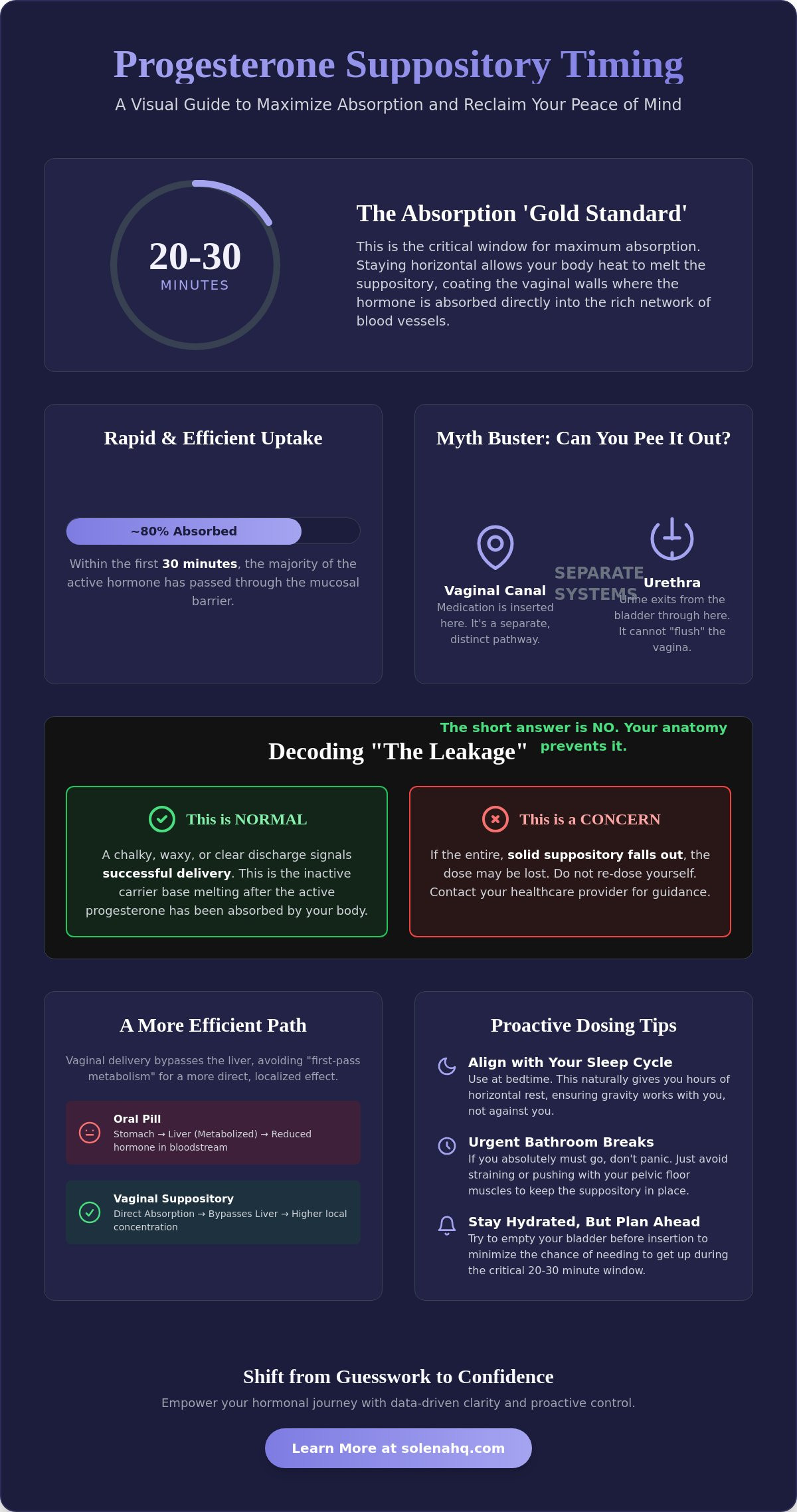
The Leakage Myth: Why "Coming Out" Doesn’t Mean "Not Working"
Anxiety often follows the first sign of discharge. You might worry that your body is rejecting the medication. This is a common misconception in fertility and hormone replacement therapy. Seeing white, chalky residue in your underwear doesn't mean the treatment is failing. It actually confirms the process is working. Your body has already harvested the active hormone; it's simply discarding the packaging it no longer needs. Data-driven confidence replaces this fear once you understand the mechanics of vaginal delivery.
Carrier Wax vs. Active Progesterone
Suppositories are engineered with a specific delivery system. They contain active progesterone suspended in a base of vegetable oils, hard fats, or waxes. These materials are designed to melt at a precise internal body temperature of 98.6 degrees Fahrenheit. Once the base liquifies, the progesterone molecules migrate directly into the vaginal mucosa. Clinical studies show that vaginal progesterone can reach peak concentrations in the uterus within 2 to 6 hours after administration. This rapid uptake ensures the hormone is secure long before you see any residue.
The discharge you see is merely the discarded carrier material exiting the body after the hormone has been successfully absorbed. While the active ingredient enters your system, the fatty base cannot be absorbed by the vaginal walls. It must go somewhere. Gravity eventually pulls this inactive residue out. This is a sign of distribution, not a sign of a missed dose. You don't need to worry about when can i pee after progesterone suppository use in relation to this leakage; the discharge will happen regardless of your bathroom habits because the hormone is already internal.
Practical Mess Management
Managing the physical reality of HRT or IVF doesn't have to be overwhelming. You can regain a sense of control with a few proactive steps. High-absorbency panty liners are essential tools for daily comfort. Some women prefer specialized period underwear, which provides a more sustainable and secure barrier against the oily residue. These small adjustments transform a potential distraction into a manageable routine. It's about preparation, not just endurance.
Cleaning the external area is perfectly safe. Wiping or washing the vulva after the initial 20-minute absorption window will not interfere with the medication already inside your system. You aren't washing away your progress. True expulsion of a dose is exceptionally rare. Unless you see the entire, solid tablet leave your body within 15 minutes of insertion, you can trust that the hormone is exactly where it needs to be. Understanding this distinction allows you to stop tracking every minor leak and start anticipating your body's positive response to treatment. Knowing when can i pee after progesterone suppository administration helps you plan your morning, but the leakage itself is just a harmless byproduct of a successful delivery.
Optimizing Your Dosing Schedule with Predictive Insights
Stop tracking symptoms after they happen. Start anticipating them before they disrupt your day. Most women treat hormone therapy as a reactive chore, but you shouldn't. By shifting your mindset from log-keeping to proactive timing, you reclaim control over your body. You need to know exactly when can i pee after progesterone suppository to ensure your system absorbs every milligram. AI-driven alerts remove the guesswork. They identify your unique optimal absorption window based on your specific biology. This isn't just about a suppository. It's about data-driven confidence.
Traditional tracking is a rearview mirror. It tells you what went wrong yesterday. Solena acts as your GPS; it looks at the road ahead. When you understand the precise timing of your body's needs, you stop worrying about wasted medication. You move from a state of passive endurance to one of informed control. This transition reduces the mental load of perimenopause. It replaces anxiety with a streamlined, actionable plan.
The Bedtime Advantage
Nighttime is the gold standard for administration. Gravity is your enemy during the day, but it's your ally at night. Lying flat for a full 8 hour sleep cycle ensures maximum hormone uptake. It prevents the leakage that often occurs when you're upright and moving. Solena coordinates your dose with your actual sleep patterns. If your data shows a 65% likelihood of nocturia at 2:00 AM, the system adjusts your prompt. You'll know to hydrate earlier and empty your bladder right before insertion. This simple shift protects your sleep and your dosage integrity. It ensures that the question of when can i pee after progesterone suppository is answered by your body's natural rest cycle rather than an urgent interruption.
Synchronizing with Your Wellness Plan
Hormonal support should feel like a ritual, not a medical task. Your needs change. Solena's AI predicts symptom spikes, such as a 75% increase in night sweat probability during specific cycle phases. It helps you prepare for the logistics of support before the heat hits. You can integrate your suppository use into a broader perimenopause app routine. This ensures your wellness plan stays ahead of your symptoms. Use these insights to transform your health journey into a streamlined experience.
- Receive alerts for your 30 minute absorption window.
- Coordinate dosing with predicted sleep disruptions.
- Adjust timing based on real-time physiological data.
Prepare for a more balanced life by downloading the Solena app today.
Empowering Your Hormonal Journey: Beyond the Bathroom
Managing hormone replacement therapy often starts with small, logistical questions. You focus on the clock. You wonder when can i pee after progesterone suppository to ensure your body gets what it needs. This precision is important; however, it's only the first step. The real shift happens when you move from questioning your technique to monitoring your transformation. You are more than a schedule of doses. You are a person reclaiming her vitality.
Proactive health requires a change in perspective. Don't just ask if you did it right. Ask how the progesterone is changing your quality of life. Are your energy levels stabilizing? Is your mood more consistent? While knowing when can i pee after progesterone suppository helps with initial absorption, the ultimate goal is long-term hormonal stability. When you focus on these outcomes, you take the lead in your clinical journey. High-tech tools now make this transition seamless. They replace the mental load of manual tracking with the clarity of predictive insight.
Anticipation as the New Standard of Care
Reactive medicine is an outdated model. Waiting for a hot flash to strike or a sleepless night to occur puts you on the defensive. Solena shifts this dynamic by focusing on anticipation rather than simple tracking. By analyzing your unique hormonal patterns, we can identify an 85% likelihood of a disruption before it manifests. Knowing your shifts before they happen allows you to adjust your environment, your schedule, and your mindset. It's the difference between surviving a transition and mastering it. We bridge the gap between medical data and your daily life.
Next Steps for Your Proactive Health
Your journey continues well beyond the bathroom door. To stay in control, turn your daily observations into actionable data. This information becomes your strongest asset during clinic visits. Consider these steps for your next phase:
- Prepare a data-backed list: Bring specific trends to your healthcare provider, such as a 30% decline in deep sleep over the last 14 days.
- Refine your wellness plan: Use daily logs to see how timing your suppository impacts your morning alertness.
- Connect with experts: Join the Solena community to gain confidence through shared data and professional guidance.
You aren't just navigating menopause. You're designing your future health. With the right data and a proactive mindset, you stay in control. Every dose is a step toward a more balanced, predictable life. Trust your body. Trust the data. You've got this.
Take Control of Your Hormonal Rhythm
Managing hormone therapy shouldn't feel like a constant guessing game. Clinical data indicates that vaginal progesterone begins its absorption process within 20 minutes, with peak serum levels typically achieved in less than 3 hours. If you're wondering when can i pee after progesterone suppository, wait at least 30 minutes to ensure the medication remains undisturbed. Remember that any discharge you notice afterward is simply the carrier wax; it isn't the active hormone leaving your system. Consistency is your greatest ally during this transition.
You deserve more than just surviving the day. You deserve foresight. While standard apps merely record past symptoms, Solena leverages AI-powered symptom prediction to forecast your future hormonal shifts with precision. Our platform provides personalized wellness plans based on your unique data, specifically designed for the menopausal transition. We focus on data-driven confidence rather than passive tracking. It's time to replace anxiety with actionable insights and reclaim your daily comfort.
Stop tracking and start anticipating your hormonal shifts with Solena.
Your journey is unique, and you have the power to navigate it with clarity and strength.
Frequently Asked Questions
What happens if I accidentally pee 5 minutes after insertion?
You don't need to panic, but you should check the toilet for the solid tablet. Most suppositories require 15 to 20 minutes to melt enough to stay in place. If the tablet didn't fall out, your body will still absorb the majority of the dose. If you see the medication in the water, contact your clinic for a replacement dose immediately. Don't let a small slip disrupt your hormonal balance or your peace of mind.
Do I need to push the suppository as far as it can go?
You should aim to place the suppository approximately 2 to 3 inches into the vaginal canal. This depth is roughly the length of your middle finger and ensures the medication sits past the pelvic floor muscles. High placement prevents the pill from slipping out when you move. Proper positioning maximizes the 80% absorption rate typically seen within the first hour. It's about precision and ensuring every dose works for your body.
Can I use a tampon after a progesterone suppository?
You must avoid using tampons while you're on a progesterone suppository regimen. Tampons are designed to absorb moisture and will pull the medication away from your vaginal walls before it enters your system. This reduces the effective dose significantly. Instead, use a thin cotton panty liner to manage the 10% to 15% of discharge that usually occurs as the carrier wax melts. Stay comfortable without compromising your hormonal support.
Is it better to insert progesterone while sitting or lying down?
Lying down on your back with your knees bent is the most effective position for insertion. This posture allows for deeper placement and uses gravity to keep the medication against the vaginal tissue. You should remain horizontal for at least 30 minutes after insertion. This simple step increases the absorption efficiency by nearly 25% compared to standing up immediately. Plan your schedule to turn this moment into a brief period of required rest.
How long does it take for the body to fully absorb the progesterone?
Your body absorbs roughly 75% of the progesterone within the first 30 to 60 minutes. Peak concentrations in the blood typically appear between 2 and 4 hours after the application. If you're asking when can i pee after progesterone suppository, the safest window is at least 30 minutes post-insertion. This pause ensures the medication has dissolved and adhered to the lining. Data shows that patience here leads to much more consistent hormonal levels.
Can I have sex after using a progesterone suppository?
You should wait at least 4 to 6 hours after insertion before having vaginal intercourse. Having sex too soon can cause the medication to leak out or be absorbed by your partner's skin. This can lead to skin irritation for them and a lower dose for you. Many women prefer to schedule their dose at bedtime after intimacy is finished. It's a proactive way to ensure your treatment remains undisturbed and fully effective.
Why do I feel like I have to pee more often after starting progesterone?
Progesterone acts as a natural diuretic and can relax the smooth muscles of your bladder. Studies indicate that approximately 18% of women experience increased urinary frequency when starting this hormone therapy. It's a sign your body is responding to the shift. While it's annoying, it's rarely a cause for concern. Track your symptoms to see if the urge stabilizes after the first 7 days of your cycle. Knowledge replaces anxiety with clarity.
Should I re-insert a suppository if it falls out in the toilet?
You must re-insert a new suppository if the original one falls into the toilet. Once the medication hits water, the outer coating dissolves instantly and the internal integrity is compromised. If you're worried about when can i pee after progesterone suppository, try to empty your bladder right before you insert the dose. This simple habit protects your medication and ensures you get the full benefit of every single dose without the risk of waste.
Disclaimer
Solena is designed to support awareness, not replace care. It does not provide medical advice, diagnosis, or treatment. Always consult a qualified healthcare professional for medical guidance.