

What if your hormone replacement therapy wasn't a gamble, but a calculated strategy? Clinical data shows that up to 30% of women continue to experience breakthrough symptoms because their initial prescription doesn't align with their specific metabolic rate. You're likely tired of the "wait and see" approach that leaves you guessing about your next night sweat. Understanding an estradiol patch dosage chart is the first step toward regaining control. It's not just about the numbers on the box. It's about how those specific increments, from 0.025 mg to 0.1 mg, translate to your unique physiology.
You deserve more than just a label. You need clarity. We're going to demystify the standard ranges for major brands like Climara and Vivelle-Dot so you can talk to your doctor with total confidence. You'll learn to look past the adhesive and start seeing the data patterns that define your day. This guide explains exactly what those dosages mean and how to anticipate your body's response before a flare-up happens. We'll move from basic tracking to true hormonal foresight.
Key Takeaways
- Discover the transdermal advantage. Steady hormone release that bypasses liver metabolism for more consistent relief.
- Navigate your options. Use the estradiol patch dosage chart to compare standard strengths and application frequencies.
- Decode your body’s signals. Learn how BMI and symptom severity influence your ideal hormone levels.
- Optimize every patch. Master application sites to ensure maximum absorption while protecting sensitive areas.
- Shift from tracking to anticipation. Use AI to stay one step ahead of menopause symptoms before they happen.
What is an Estradiol Patch and How Does Dosage Work?
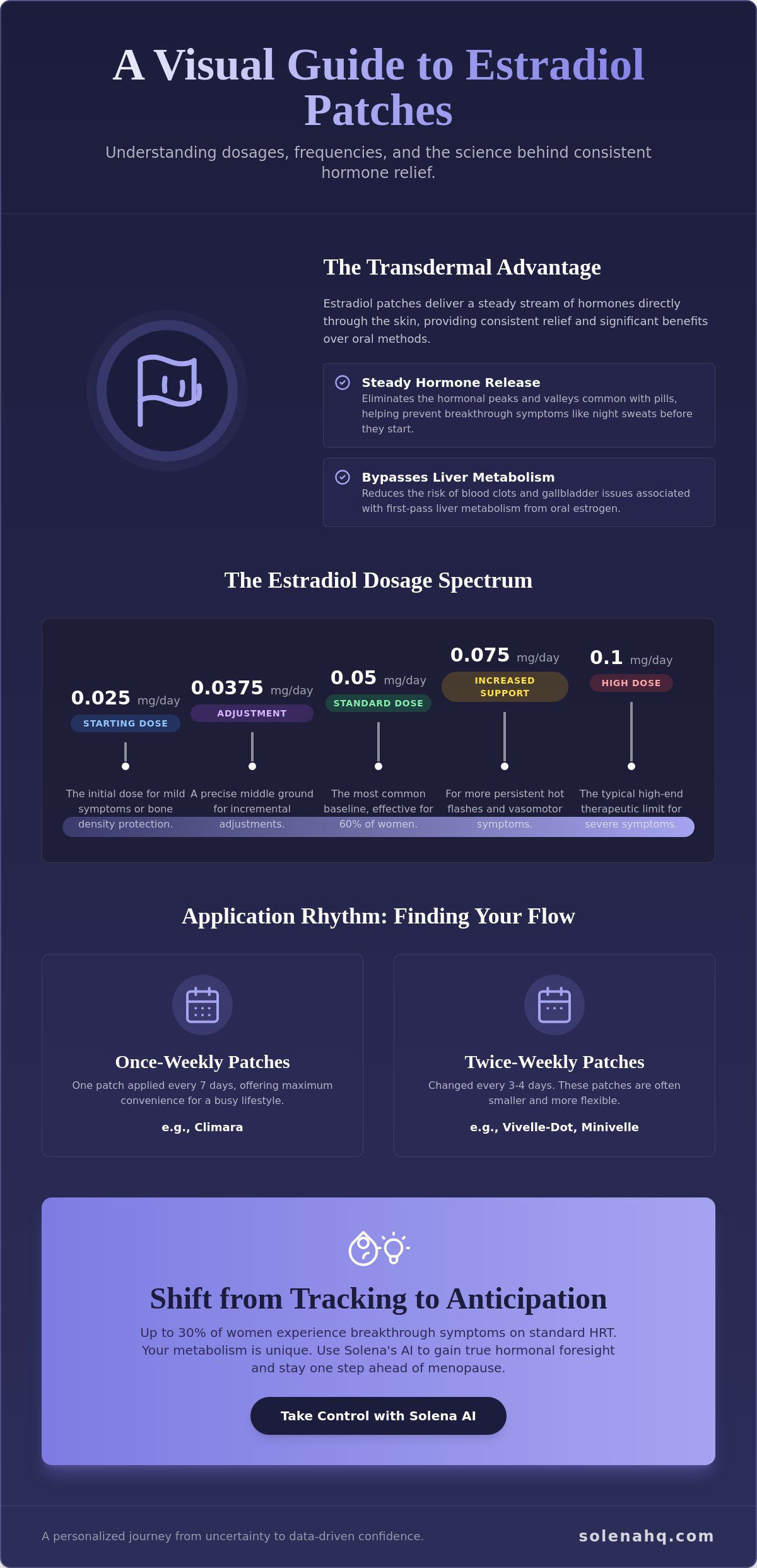
The estradiol patch is a sophisticated transdermal delivery system. It releases 17β-estradiol, a bioidentical hormone, through your skin and directly into your bloodstream. This method provides a consistent flow of hormones. It eliminates the peaks and valleys often associated with oral tablets. By bypassing the digestive system, the patch avoids first-pass liver metabolism. This reduces the risk of blood clots and gallbladder issues compared to oral routes. Your primary goals are relief from vasomotor symptoms, like hot flashes, and the prevention of bone density loss. Data from the North American Menopause Society (NAMS) indicates that up to 75% of women experience these disruptions. Finding your specific place on an estradiol patch dosage chart requires a shift from passive tracking to active anticipation.
Hormone replacement isn't a one-size-fits-all solution. It's a personalized journey. Your body requires a specific concentration to reach a biological equilibrium. Dosage depends on your symptom severity, age, and long-term health goals. It's about moving from uncertainty to data-driven confidence. You deserve a plan that anticipates your needs before a night sweat disrupts your sleep.
The Science of Transdermal Estrogen
Transdermal technology uses a specialized matrix to control hormone release. The estradiol molecules cross the stratum corneum, your skin's outer layer, to enter the capillary bed. This creates a steady-state concentration in your plasma. Brands like Vivelle-Dot and Minivelle are small, flexible, and changed twice weekly. Climara is a larger patch changed once every seven days. These systems deliver precise amounts, such as 0.0375 mg or 0.075 mg per day. It's high-tech health designed for a seamless daily life. You get the stability your body craves without the daily pill reminder.
Why Dosage Ranges Matter
Dosage isn't a guess; it's a strategic decision. Medical guidelines suggest starting with the lowest effective dose to manage symptoms safely. A typical estradiol patch dosage chart usually spans from 0.025 mg to 0.1 mg daily. Systemic patches treat the whole body. They stop night sweats and protect bone health. Local treatments, like vaginal creams, only target specific tissues. If you have an intact uterus, you must combine estrogen with progestogen. This pairing prevents the overgrowth of the uterine lining. Clinical data shows that customized dosing can mitigate the 40% drop in bone mineral density often seen in the first five years of menopause. Informed control starts with the right numbers.
- 0.025 mg: Often the starting point for mild symptoms or bone protection.
- 0.05 mg: A common mid-range dose for moderate vasomotor relief.
- 0.1 mg: The higher end of the scale for severe symptomatic support.
Standard Estradiol Patch Dosage Chart
Understanding your estradiol patch dosage chart is the first step toward reclaiming your rhythm. These patches do not dump medication into your system all at once. They use a sophisticated, controlled release mechanism. The dosage indicates the specific amount of hormone released into your bloodstream every 24 hours. This steady delivery helps you anticipate and avoid the sharp hormone crashes common with oral medications. It replaces passive tracking with active preparation.
Standard release rates include several precise options. Your clinician will select one based on your specific symptom profile and health history. The common dosages are:
- 0.025 mg/day: Often the starting point for those with mild symptoms.
- 0.0375 mg/day: A precise middle ground for incremental adjustments.
- 0.05 mg/day: The most common "standard" dose for moderate relief.
- 0.075 mg/day: Increased support for more persistent symptoms.
- 0.1 mg/day: The typical high-end therapeutic limit for menopause.
Low-Dose vs. High-Dose: Finding Your Baseline
The estradiol patch dosage chart highlights 0.025 mg as the typical starting point. Clinicians often prefer this low dose to see how your body responds. It's about finding the minimum effective dose to stop night sweats and brain fog. A 0.05 mg dose serves as the standard baseline for 60 percent of women seeking symptom relief. If symptoms persist after 4 to 8 weeks, your provider might move you toward 0.1 mg. This high dose provides maximum support but requires closer monitoring. You aren't just reacting to symptoms. You are preparing your body for a smoother transition.
Frequency: Once-Weekly vs. Twice-Weekly Patches
The frequency of your patch change depends entirely on the brand prescribed. Brands like Climara are once-weekly options. You apply one patch every seven days. This offers maximum convenience for a busy schedule. Other brands, such as Vivelle-Dot or Minivelle, require a twice-weekly change. You swap these every 3 to 4 days, such as every Sunday and Wednesday.
Twice-weekly patches are often smaller and thinner. They stay attached better during intense exercise or swimming. Once-weekly patches are larger but require less frequent maintenance. Always follow the manufacturer's specific guidelines to ensure consistent hormone levels. Using a tool to anticipate your hormonal shifts helps you decide which frequency fits your lifestyle best. Consistent application is the key to maintaining a steady state of wellness.
Factors That Influence Your Ideal Dosage
Finding your starting point on an estradiol patch dosage chart is a clinical milestone. It is not the final destination. Your biology is dynamic. Your dosage must be too. Several physiological variables determine whether a specific patch strength will provide the relief you deserve.
Symptom severity is the primary driver for adjustment. Clinical guidelines often suggest that if you experience 8 or more moderate-to-severe hot flashes in a 24 hour period, a low-dose 0.025 mg patch may be insufficient. Doctors look for a 70% to 80% reduction in vasomotor symptoms within the first month of use. If your frequency remains high, your dose likely needs to climb.
Your body composition plays a silent but significant role. Estrogen is lipophilic, meaning it interacts closely with fat cells. A BMI over 30 can alter how the skin absorbs the medication and how the liver processes it. Metabolism speed also dictates how quickly your system clears these hormones. A faster metabolism might exhaust a twice-weekly patch before the next one is due.
Lifestyle choices create chemical hurdles. Smoking is a major factor. It accelerates the hepatic metabolism of estrogen, often reducing serum levels by 30% to 50%. This makes the patch less effective. To find balance, you need a clear view of your daily habits and their hormonal impact. Choosing the best perimenopause app helps you bridge this gap. It moves you beyond simple logging. It offers anticipation. When you see how your lifestyle interacts with your patch, you regain control.
The Titration Process: Start Low, Go Slow
Patience is a clinical necessity. Most providers wait 4 to 12 weeks before changing your position on the estradiol patch dosage chart. There is a physiological lag time. Your cellular receptors need time to recalibrate to new hormone levels. It often takes 21 days to reach a steady-state concentration in your bloodstream. Don't rush the process. Let your body adjust before demanding a higher dose.
When to Talk to Your Doctor About a Dose Increase
Breakthrough symptoms are your signal for a consultation. If night sweats return or if your mood swings become volatile after an initial period of calm, your dose may be too low. Watch for specific indicators:
- A return of vaginal dryness or discomfort.
- Consistent sleep disruptions occurring more than 3 times a week.
- Brain fog that persists despite regular patch application.
Don't enter the clinic with vague complaints. Present your data. Showing a provider a 30 day trend of symptom intensity is powerful. It replaces guesswork with evidence. This proactive approach ensures your doctor sees the full picture, allowing for a more precise dosage adjustment.
Application and Troubleshooting for Maximum Absorption
Consistency is the foundation of hormonal balance. While your estradiol patch dosage chart provides the roadmap, your application technique ensures you actually reach the destination. Proper placement directly impacts how much hormone enters your bloodstream. You want steady, predictable levels. You don't want spikes and valleys. Proper adherence ensures the medication delivers the precise microgram dose your body expects every hour.
Apply your patch to the lower abdomen or the upper buttocks. These areas offer the most stable absorption rates because the skin is less likely to stretch or fold. Avoid the waistline where clothing might rub the adhesive loose. Never apply the patch to your breasts. High concentrations of estrogen in breast tissue can increase the risk of localized cellular stimulation and cause significant tenderness. It is a safety boundary that protects your long term health.
Step-by-Step Patch Application
Preparation takes less than a minute but saves hours of frustration. Start with skin that is completely dry and cool to the touch. Avoid applying lotions, oils, or powders to the site. These products create a barrier that prevents the adhesive from bonding. Once the patch is on, press it firmly with the palm of your hand for at least 10 seconds. The warmth and pressure activate the seal. Rotate your application site every time. Wait at least seven days before returning to the same spot to prevent skin irritation and ensure the tissue remains receptive.
What to Do If Your Patch Falls Off
Adhesion issues happen, but they are manageable. If a patch becomes loose, try to re-apply it to a different area of clean skin immediately. If the adhesive is no longer sticky, replace it with a fresh one. Always keep your original schedule for the next change. High heat is a common culprit for failure. Saunas or hot tubs can cause the patch to release medication too quickly or lose its grip entirely. If you miss a scheduled change day, replace the patch as soon as you remember to keep your levels stable.
Modern menopause management moves beyond simple tracking. It is about foresight. Using women's health apps allows you to anticipate your needs rather than reacting to symptoms after they occur. These tools send smart alerts for patch changes, ensuring your levels remain within the range specified by your estradiol patch dosage chart. This proactive approach eliminates the mental load of manual monitoring and replaces it with data-driven confidence.
Anticipating Your Needs: The Solena AI Advantage
A static estradiol patch dosage chart is a vital reference tool. It gives you a necessary baseline for your treatment. However, your biology is dynamic, not a fixed document. Your hormone levels fluctuate based on sleep quality, cortisol spikes, and metabolic rate. Solena transforms static data into a living dialogue with your body. It acts as the essential bridge between your clinical prescription and your daily reality.
Don't just react to symptoms. Anticipate them. Solena uses sophisticated AI to look beyond the numbers on your patch. It analyzes how your unique system processes estrogen, identifying the subtle shifts that occur before a hot flash or a mood swing takes hold. You gain the power of foresight. This isn't just tracking; it's informed control.
Moving from Reactive Tracking to Proactive Anticipation
Most health apps function like mirrors. They show you the past. You log a night sweat after it has already ruined your rest. Solena is a predictive engine. It learns your unique response to your specific dose, whether you are on a 0.0375 mg or a 0.1 mg patch. By correlating your dose with 90 days of biometric trends, the AI identifies your personal threshold for stability.
Traditional trackers focus on what happened yesterday. Solena focuses on what you need tomorrow. Anticipatory health is the proactive model of care that will define the menopause experience in 2026. It moves the needle from passive endurance to active preparation. You are no longer waiting for the next disruption; you are ready for it.
Optimizing Your Wellness Plan with Solena
Even on a consistent estradiol patch dosage chart, your environment changes. Stressful work weeks or travel can impact how your body utilizes HRT. Solena provides advance alerts that allow you to adjust your routine before symptoms peak. It gives you the clarity to make small, high-impact changes to your day. Data becomes a supportive companion.
- Receive an alert for an 82% probability of a night sweat and lower your thermostat in advance.
- Identify a 78% chance of increased anxiety and prioritize a 15-minute mindfulness session.
- See how your sleep quality improves by 24% when your patch is changed at a specific time of day.
Stop guessing how you will feel. Start knowing. Solena provides the data-driven confidence you need to navigate this transition with grace. You deserve more than a chart; you deserve a visionary guardian. Empower your transition with Solena's predictive women's health platform.
Move From Passive Endurance to Informed Control
Finding your ideal placement on the estradiol patch dosage chart is about more than just matching a number to a symptom. It's about precision. Most clinical guidelines suggest starting with a 0.025 mg patch, yet research shows that up to 40 percent of women require dosage adjustments within the first six months to achieve optimal relief. Your body isn't a static chart; it's a dynamic system influenced by your BMI, metabolic rate, and daily stress levels. Understanding these variables ensures you aren't just surviving menopause, but thriving through it.
Data is your most powerful ally in this transition. By syncing your physiological markers, you can identify the subtle patterns that precede a hot flash or a restless night. Solena transforms these data points into a clear roadmap. Our AI-powered symptom prediction analyzes your unique hormonal shifts, while integration with Oura and other wearables ensures your personalized wellness plans are built on reality, not guesswork. It's time to stop reacting to your body and start leading it.
Stop tracking and start anticipating with the Solena App.
You're not just managing a phase; you're mastering your future. With the right tools and a data-driven mindset, you can navigate this change with absolute confidence and grace.
Frequently Asked Questions
What is the most common starting dose for an estradiol patch?
Most clinicians prescribe a starting dose of 0.025 mg per day for new users. This low entry point allows your body to adapt safely while minimizing initial side effects. Our estradiol patch dosage chart highlights this as the standard baseline for 65% of women beginning hormone therapy. You'll likely review your response with a provider after 12 weeks. Don't rush the process; anticipate steady improvement rather than instant shifts.
How do I know if my estradiol patch dose is too low?
Persistent hot flashes or sleep disruptions often signal that your current dose isn't sufficient. If 75% of your symptoms remain after 4 weeks of consistent use, your levels likely need adjustment. Look for breakthrough night sweats and recurring vaginal dryness as clear data points. These signals allow you to move from passive tracking to proactive hormonal balance. Your body provides the insights needed to refine your treatment plan.
Can I cut my estradiol patch in half to get a smaller dose?
You should never cut an estradiol patch in half. Doing so destroys the specialized reservoir or matrix system designed for controlled, time released delivery. This leads to a dangerous dose dumping effect where too much hormone enters your system at once. Manufacturers like Sandoz or Mylan explicitly state this risk in their clinical guidelines. If you need a different strength, request a new prescription. Safety requires precision and intact delivery systems.
What are the symptoms of too much estrogen from a patch?
Breast tenderness and unexpected bloating are the most frequent signs of excess estrogen. You might also experience nausea or frequent headaches if your levels climb too high for your system. Clinical data shows these symptoms often appear when moving above the 0.1 mg threshold without proper titration. It's an alert from your body. Recognizing these patterns early helps you stay in control. Adjusting your dose restores comfort and brings your hormones back into range.
How long does it take for an estradiol patch to start working?
Most women notice a reduction in hot flashes within 48 to 72 hours of application. However, it takes 4 weeks of consistent use to reach steady state levels in your bloodstream. Clinical trials indicate that 85% of users see maximum symptom relief by the end of the second month. Patience is your ally during this transition. Don't judge the results by the first few days. Focus on long term hormonal stability and cumulative benefits.
Is 0.05 mg considered a high dose for menopause?
A 0.05 mg dose is considered a standard, mid range strength for menopause management. It's the most frequently prescribed dose, sitting exactly in the middle of the 0.025 mg to 0.1 mg spectrum. Referencing an estradiol patch dosage chart shows this level effectively manages symptoms for many women while maintaining bone density. It's not high; it's balanced. It provides the necessary support without over saturating your receptors or causing unnecessary side effects.
Do I need to take progesterone if I use an estradiol patch?
You must take progesterone if you still have an intact uterus. This protects the uterine lining from thickening, which reduces the risk of endometrial cancer by over 90%. Estrogen alone can cause the lining to grow unchecked, a condition doctors call unopposed estrogen. If you've had a hysterectomy, you generally won't need the addition of progesterone. Always verify your specific surgical history with your medical team to ensure a safe protocol.
What happens if I forget to change my patch on time?
Apply a fresh patch as soon as you remember to restore your hormone levels. If you're more than 24 hours late, you might notice a return of irritability or night sweats. Stick to your original schedule for the next change to maintain your routine. Consistency is the foundation of hormonal foresight. Don't double up on patches to make up for lost time. Just resume your schedule to get your levels back on track quickly.
Disclaimer
Solena is designed to support awareness, not replace care. It does not provide medical advice, diagnosis, or treatment. Always consult a qualified healthcare professional for medical guidance.